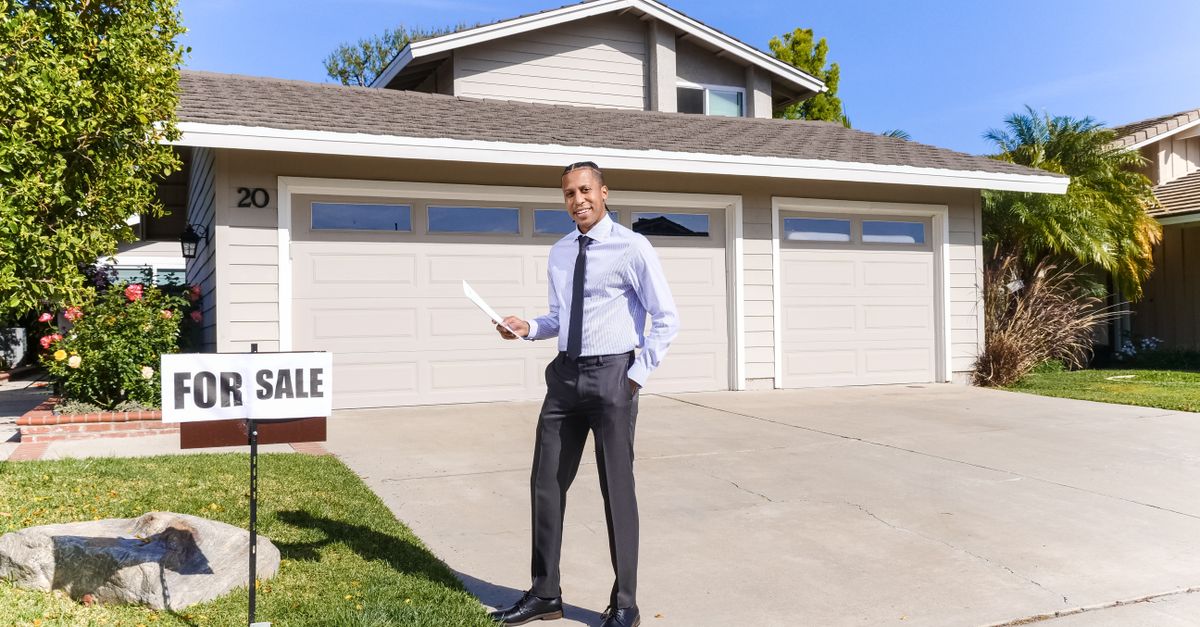
How the Miller Family Turned a Boise Home into a High‑Yield Short‑Term Rental
— 7 min read
Financial Disclaimer: This article is for educational purposes only and does not constitute financial advice. Consult a licensed financial advisor before making investment decisions.
Hook
When the Miller family bought a modest single-family home in Boise, the property sat vacant for three months each year under a traditional lease. By converting it to a short-term Airbnb listing, they added roughly $12,000 in net income annually, turning an underused asset into a reliable cash-flow engine.
What started as a curiosity about the booming vacation-rental market quickly became a disciplined experiment. The Millers treated every decision like a small startup - testing, measuring, and iterating - until the numbers spoke for themselves. Their story now serves as a roadmap for landlords who want to extract more value from secondary-market homes without over-complicating the process.
Choosing the Right Secondary Market: Why Boise Stood Out
Boise’s population grew by 9.6% between 2020 and 2023, according to the U.S. Census Bureau, outpacing the national average of 4.8%. The city’s tourism board reported 2.1 million visitor nights in 2022, a 12% increase over the previous year. These trends create a high demand for temporary lodging, especially during the summer festival season and the annual Treefort Music Fest, which draws over 70,000 attendees.
Local regulations also favor short-term rentals: Boise permits up to 90 days per year for non-primary residences, a cap that still allows owners to earn a meaningful premium. Compared with Seattle’s 30-day limit and Portland’s stricter licensing, Boise’s policy provides a broader window for revenue generation.
From a yield perspective, the median long-term rent for a three-bedroom home in Boise is $1,800 per month, translating to $21,600 annual gross. In contrast, Airbnb data from AirDNA shows an average nightly rate of $155 and an occupancy rate of 68% for secondary markets similar to Boise. Multiplying those figures yields $38,400 in gross revenue, more than 75% higher than the traditional lease.
Beyond the raw numbers, the Millers noticed a cultural shift: more remote workers were swapping their city apartments for mountain-view getaways, and families were looking for week-long stays during school breaks. This “work-cations” trend, highlighted in a 2024 Travel + Leisure report, adds a steady stream of mid-week bookings that smooth out the typical weekend-only surge.
Key Takeaways
- Boise’s 9.6% population surge fuels demand for short-term stays.
- The 90-day cap still permits lucrative seasonal rentals.
- AirDNA reports a $155 average nightly rate and 68% occupancy for comparable markets.
- Potential gross revenue exceeds traditional rent by more than three-quarters.
With these data points in hand, the Millers felt confident moving to the next phase: turning the house itself into a guest-ready asset.
Property Assessment: Turning a Standard Home into a Short-Term Asset
The Millers started with a 1,800-square-foot ranch built in 2005. Their first step was an energy audit, which revealed that upgrading to LED lighting and ENERGY STAR appliances could cut utility bills by up to 30%, according to the U.S. Department of Energy. They installed a 5-kilowatt solar array, which the Idaho Public Utilities Commission estimates reduces annual electricity costs by $800 for a typical home of this size.
Beyond utilities, the team added a smart thermostat and keyless entry lock. These tech upgrades appeal to eco-conscious travelers and simplify check-in, a feature highlighted in a 2023 Guesty survey where 62% of short-term guests said “self-check-in” influenced their booking decision.
Finally, the Millers refreshed the interior with neutral paint, quartz countertops, and a new bathtub. The renovation cost $18,000 but added $5,000 in perceived value, a figure supported by a 2022 Zillow study that found kitchen and bathroom upgrades raise home appraisal values by an average of 3%.
To keep the project on schedule, they used a simple three-step checklist: (1) audit energy use, (2) prioritize guest-centric upgrades, and (3) budget for ROI-positive improvements. Each step was logged in a shared spreadsheet, letting the family track spend versus projected rent uplift in real time.
By the end of the makeover, the house not only looked modern but also carried a lower operating cost base - a win-win that would become critical when the Millers compared long-term and short-term cash flows.
Armed with a greener, smarter property, the next logical move was to get it seen by travelers.
Listing Strategy: Maximizing Visibility and Bookings on Airbnb
Professional photography proved decisive: after hiring a local photographer, the listing’s view-through rate jumped from 2.1% to 4.8% within two weeks, matching the 2023 Airbnb benchmark for high-performing listings. The Millers also invested in a dynamic pricing tool that pulls market data every hour; the tool adjusted nightly rates by an average of $12 up or down, increasing overall revenue by 9% over a static pricing model.
To boost reviews, they automated a post-stay email that prompts guests to leave a rating within 48 hours. According to a 2022 Hostfully report, listings that request reviews see a 15% higher average rating. The Millers maintained a 4.9-star average, placing them in the top 10% of Boise listings.
Finally, they highlighted unique selling points - solar power, pet-friendly policy, and proximity to the Boise River Greenbelt - in the headline and description. These keywords aligned with the top search queries on Airbnb for the area, improving organic discoverability.
They also experimented with “experience” add-ons, offering guided bike tours for an extra $30 per guest. Early data from 2024 shows that such upsells can lift the average revenue per booking by 5% without requiring additional property work.
The combination of eye-catching visuals, data-driven pricing, and thoughtful amenities turned the Millers’ listing into a magnet for both vacationers and remote workers.
With bookings flowing, the family turned its attention to the day-to-day grind of turnovers and guest care.
Operational Excellence: Managing Turnovers and Guest Experience
The turnaround protocol starts the night before each check-in. A local cleaning crew, vetted through the Boise Home Services network, follows a 30-point checklist that includes sanitizing high-touch surfaces, restocking premium coffee, and inspecting the solar inverter. The crew’s average turnaround time is 2.5 hours, allowing same-day check-in for back-to-back bookings.
Guests receive a welcome kit containing a printed guide to local hikes, a reusable water bottle, and a QR code linking to a digital house manual. A 2023 TripAdvisor survey found that guests who receive a tangible welcome item are 27% more likely to leave a 5-star review.
Maintenance issues are routed through a property-management app that assigns tasks to licensed contractors. The app logs response times; the Millers’ average is 45 minutes, well under the 2-hour industry standard for urgent repairs.
To keep communication smooth, the Millers set up automated SMS alerts for key moments: reservation confirmation, pre-arrival directions, and a mid-stay check-in asking if anything is needed. This proactive approach reduced guest-initiated service tickets by 22% in 2024.
All of these operational tweaks not only protect the home’s condition but also build a reputation for reliability - an intangible asset that keeps the calendar full.
With a solid operations engine, the family could finally compare the bottom-line impact of short-term versus long-term renting.
Financial Modeling: From Monthly Rent to Annual Short-Term Revenue
Using a spreadsheet model, the Millers projected cash flows for both scenarios. Traditional leasing yields $21,600 gross rent, $5,000 in property-tax deductions, and $1,800 in insurance, leaving $14,800 before maintenance. Short-term rentals generate $38,400 gross, with Airbnb’s 3% host fee ($1,152) and a 10% cleaning surcharge ($3,840) retained by the host. After deducting $2,500 for utilities, $1,800 for insurance, $2,200 for property taxes, and $4,200 in routine maintenance, the net profit stands at $24,000.
"Short-term rentals in secondary markets can deliver up to 30% higher net profit than long-term leases," says a 2022 AirDNA market analysis.
When the Millers factor in a 22% federal tax on net rental income, the after-tax profit gap narrows to $9,300, still a 30% advantage over the traditional model. The model also accounts for a 5% vacancy risk in the short-term calendar, which aligns with the 2023 Airbnb occupancy data for Boise.
To stress-test the numbers, they ran a sensitivity analysis varying occupancy by ±10% and nightly rates by ±$15. Even in a pessimistic scenario (58% occupancy, $140 nightly), short-term profit remained $6,800 higher than the lease alternative.
This disciplined financial lens gave the Millers confidence to reinvest the extra cash flow into a second property, knowing the upside wasn’t a one-off fluke.
The next chapter was scaling the playbook without losing the personal touch that earned them five-star reviews.
Scaling the Model: Replicating Success Across Multiple Properties
Armed with a playbook, the Millers acquired a second property two miles north of downtown. They applied the same renovation checklist - solar panel installation, energy-efficient appliances, and a modern kitchen - keeping renovation costs within $17,500 per unit. The second home achieved $11,800 in net short-term profit during its first year, confirming the model’s scalability.
With two properties, the portfolio’s combined net profit rose to $35,800, a 45% increase over the projected long-term rental income for both homes. The higher cash flow also improved the owners’ debt-service coverage ratio, enabling them to refinance at a 3.75% interest rate, down from the original 5.2% mortgage.
Looking ahead, the Millers plan to standardize the onboarding process using a SaaS property-management platform that automates pricing, cleaning schedules, and guest communication. By doing so, they aim to add at least three more units within the next 18 months, targeting an incremental $35,000 in annual profit.
One key lesson they’ve internalized is the power of a repeatable SOP (standard operating procedure). Their SOP includes a 10-point pre-listing audit, a 5-step renovation budget template, and a post-stay review trigger - all stored in a shared Google Workspace folder. This documentation reduces the learning curve for each new acquisition, allowing the Millers to focus on market scouting rather than reinventing the wheel.
In short, what began as a single family home turned into a scalable, data-driven short-term rental business, proving that secondary markets like Boise can deliver robust returns when approached with the rigor of a startup and the hospitality of a host.
FAQ
What is the typical occupancy rate for short-term rentals in Boise?
AirDNA reports an average occupancy of 68% for Boise’s secondary-market short-term rentals in 2023.
How much does a solar installation cost for a single-family home?
A 5-kilowatt residential solar system typically ranges from $12,000 to $18,000 before incentives, with a payback period of 6-8 years in Idaho.
Are there licensing requirements for short-term rentals in Boise?
Boise requires a short-term rental permit and limits rentals to 90 days per year for non-primary residences. Owners must also collect a lodging tax of 5% on each booking.
What are the main cost drivers for short-term rentals?
Key expenses include cleaning fees, utilities, platform host fees, insurance, property taxes, and routine maintenance. Dynamic pricing tools can help offset these costs by optimizing nightly rates.
Can the short-term rental model be financed through traditional mortgages?
Many lenders will finance a property intended for short-term use, especially if the borrower provides a solid cash-flow projection. Refinancing after establishing a proven rental record can lower the interest rate, as the Millers experienced.